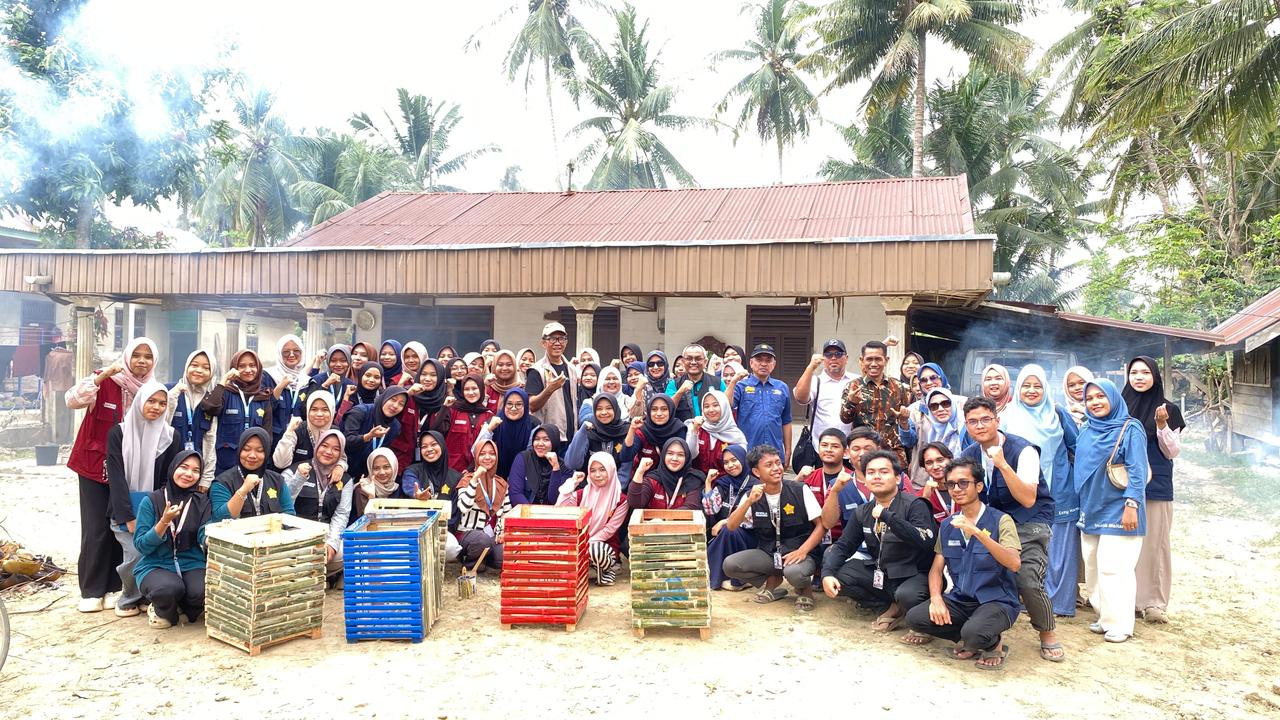
Bireuen, February 11, 2026 – The Dean of the Faculty of Mathematics and Natural Sciences (FMIPA), Prof. Dr. Taufik Fuadi Abidin, S.Si., M.Tech, conducted a monitoring and evaluation (M&E) visit for students participating in the 2026 Mahasiswa Berdampak Program in Im Budee Village and Pulo Reudeup Village, Bireuen Regency. The visit reflects the faculty’s commitment to ensuring that community service programs are implemented effectively and generate tangible impacts for local communities.
The 2026 Mahasiswa Berdampak Program is a community engagement initiative funded by the Ministry of Higher Education, Science, and Technology (Kemdiktisaintek). The program is simultaneously implemented across disaster-affected regions in Aceh, North Sumatra, and West Sumatra. It aims to strengthen the role of university students as agents of change in supporting social, economic, and environmental recovery through multidisciplinary and science-based approaches.
During the monitoring visit, the Dean was accompanied by the Vice Dean for Student Affairs, Alumni, and Partnerships, who also serves as the Field Supervisor (DPL) for the program, Dr. Ir. Wira Dharma, S.Si., M.Si., M.P., IPM. The delegation also included Prof. Dr. Lenni Fitri, S.Si., M.P., Dr. Alia Rizki, S.Si., M.Sc., Dr. Ahmad Nizam, S.E., M.M., M. Ridha Siregar, S.E., M.M., and supporting expert Dr. Ir. Essy Harnelly, S.Si., M.Si and Yekki Yasmin, S.Si., M.Si. Their presence demonstrated strong institutional and interdisciplinary support for the program’s implementation.
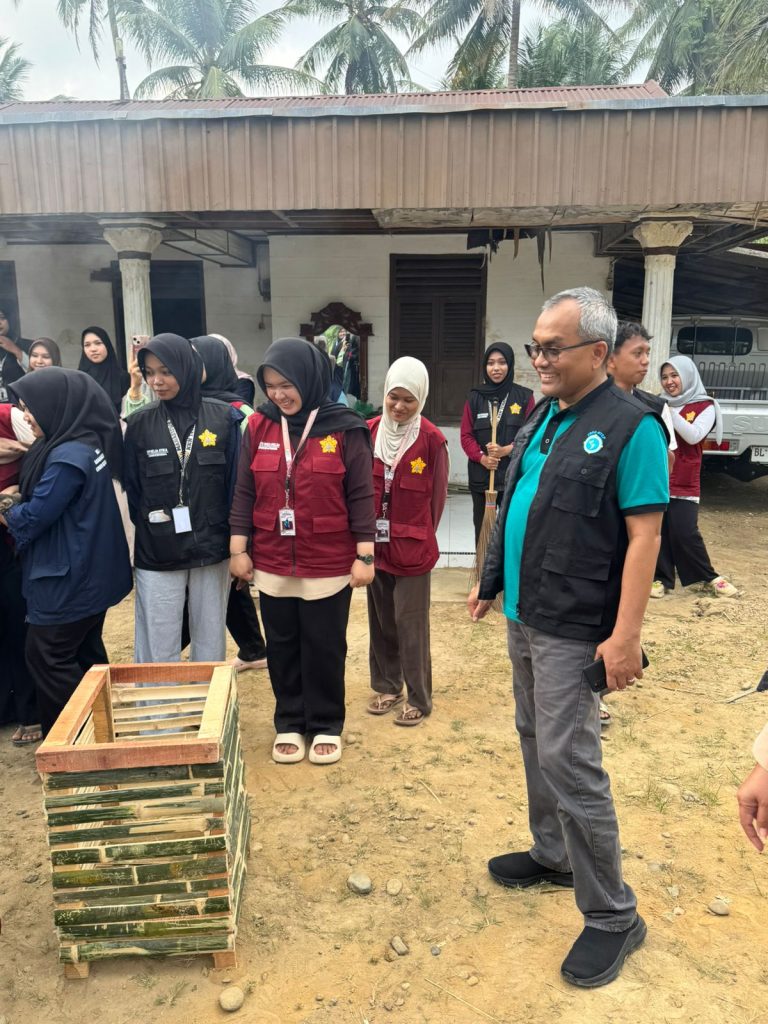
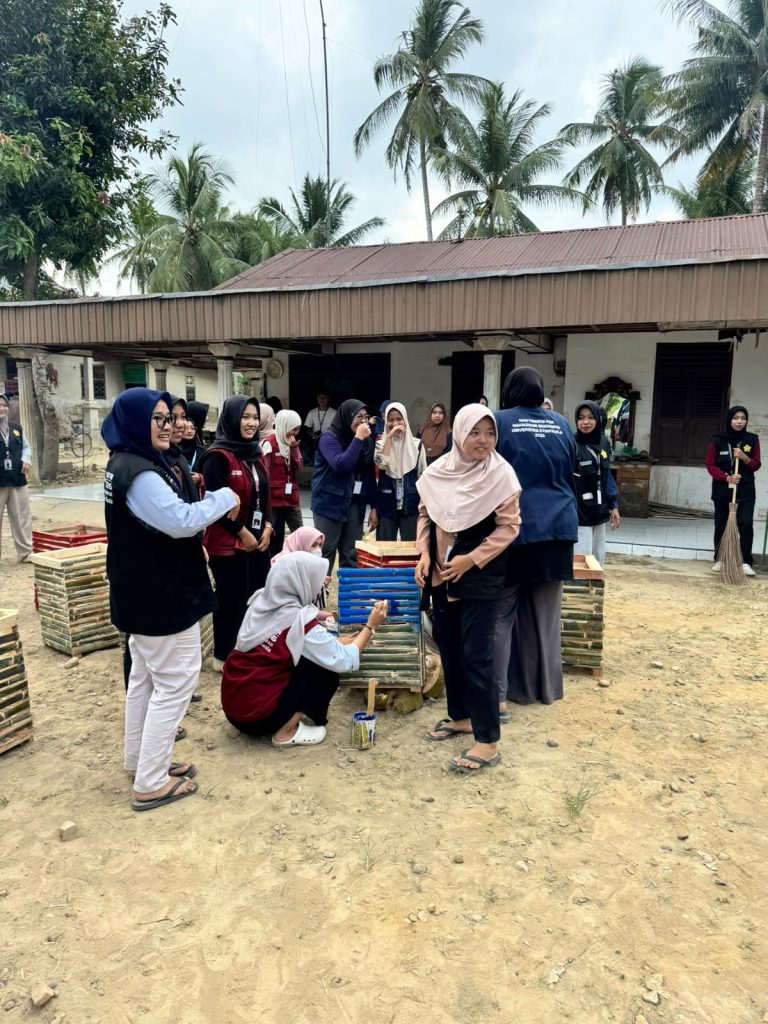
The monitoring activities were complemented by meetings with the Head of Pulo Reudeup Village, Mr. Salman, and the Head of Im Budee Village, Mr. Iskandar. Discussions focused on program achievements, community participation, challenges encountered in the field, and sustainability strategies to ensure that the initiatives continue after the students complete their community service period. Village authorities expressed appreciation for the students’ contributions, noting that the programs addressed real and urgent community needs.
The participating students come from FMIPA, the Faculty of Economics and Business (FEB), and the Faculty of Law (FH), enabling a comprehensive approach that integrates scientific, economic, and socio-legal perspectives in designing and implementing community programs.
In Im Budee Village, students carried out an economic empowerment initiative through training sessions on producing traditional wet and dry cakes. Beyond technical skills, the program also introduced basic business management, packaging techniques, and simple marketing strategies. This initiative is expected to stimulate sustainable home-based businesses and increase household income, particularly for women and homemakers.
Meanwhile, in Pulo Reudeup Village, students implemented a sanitation program aimed at improving public awareness of environmental cleanliness and health. Activities included education on clean and healthy living practices, household waste management, and efforts to create a more hygienic and resilient environment. This program plays an essential role in supporting post-disaster recovery and preventing future public health issues.
On this occasion, Prof. Dr. Taufik Fuadi Abidin emphasized that the 2026 Mahasiswa Berdampak Program represents a concrete implementation of the university’s tridharma, particularly community service. He highlighted that students must not only learn from the community but also provide science- and technology-based solutions that are practical and sustainable.
“Students should serve as catalysts for positive change by delivering meaningful contributions that directly improve the quality of life within the community,” he stated.
The monitoring and evaluation visit forms part of FMIPA’s broader commitment to maintaining program quality, ensuring alignment with established objectives, and strengthening collaboration between higher education institutions, local governments, and communities. It is expected that the 2026 Mahasiswa Berdampak Program will serve as a sustainable model of collaboration in supporting regional development and post-disaster recovery efforts.
