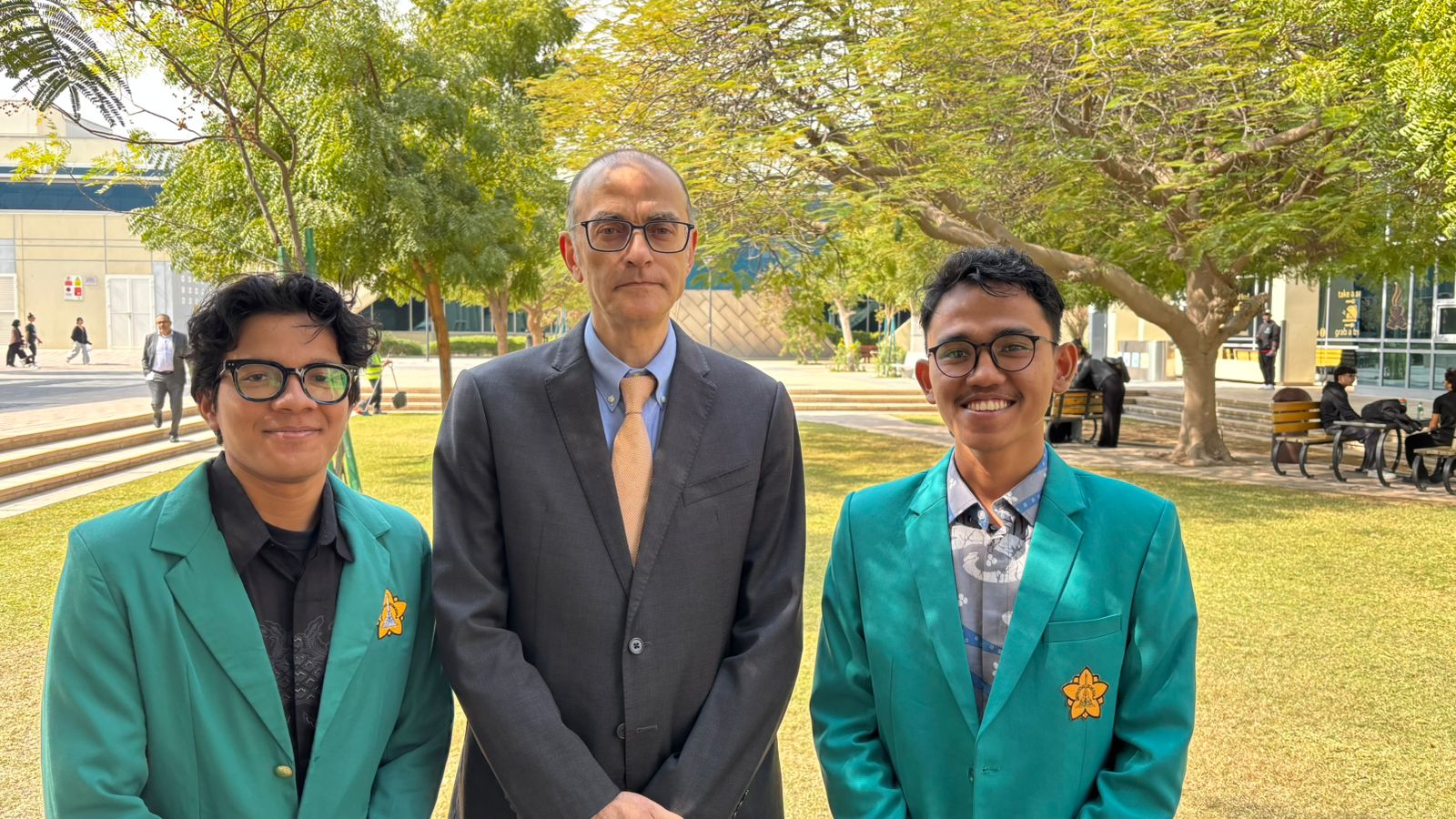
Two students from Universitas Syiah Kuala (USK), Muhammad Faruqi and Achmad Atha Zayyan, took part in the Winter School 2026 program hosted by the University of Doha for Sciences and Technology (UDST), Qatar. The program was organized by the College of Computing and IT and brought together dozens of students, researchers, and professors from various countries.
The journey began on Wednesday, January 21, 2026, when the students departed from Sultan Iskandar Muda International Airport, Aceh, to Kuala Lumpur. From there, they continued their trip with a transit flight to Guangzhou before arriving at Hamad International Airport, Doha, on January 23, 2026. Upon arrival, participants were welcomed by the UDST organizing committee and escorted to their accommodation.
The Winter School officially commenced on January 25, 2026, at 06:30 a.m. local time, with an opening ceremony led by the Dean of the College of Computing and IT, Prof. Zakaria Maamar. In his opening remarks, he emphasized the importance of global collaboration in advancing technology, particularly in the field of artificial intelligence.
“This Winter School is designed as a platform for exchanging ideas, fostering collaboration, and encouraging innovation. We hope this program will not only broaden participants’ academic perspectives but also build long-term international networks among students, researchers, and institutions,” said Prof. Zakaria Maamar.
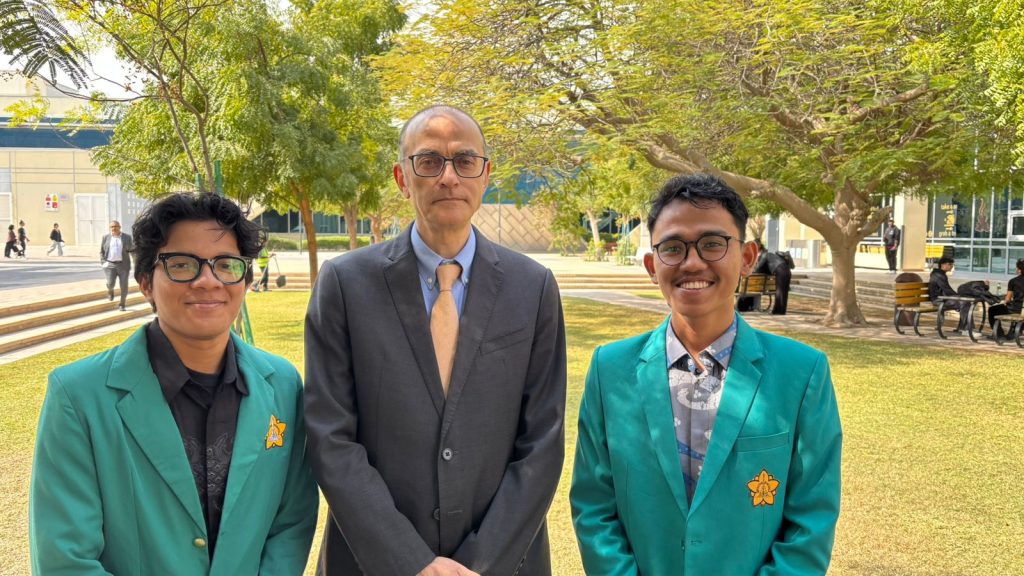
The opening session continued with an introduction to the program by Dr. Oussama Djedidi, who highlighted the significant growth in participation. While the previous edition hosted around 30 participants, the 2026 Winter School welcomed more than 60 participants, including undergraduate, master’s, and PhD students, as well as several professors. He also noted that this year’s curriculum was designed to be more in-depth, moving beyond the fundamental focus on AI and Machine Learning of the previous year.
Academic sessions began with a keynote by Conor Spicer (GTM OpenAI) entitled “From Intent to Impact: How AI Rewrites Skills, Software, and Institutions”, followed by Dr. Oscar Pastor with “The Grand Challenge of Deciphering the Language of Life.” The first day concluded with a panel discussion titled “Building Trustworthy and Secure AI Systems”, moderated by Dr. Feras Batarseh.
On Monday, January 26, 2026, participants attended sessions by Dr. Walid Maalej on “Generative Requirements Engineering and Design” and Dr. Tewfik Ziadi on “Engineering AI-Based Systems with Software Product Lines.” After a short coffee break, activities continued with a seminar and practical session entitled “Bench to Bedside: The Challenges of Translating Clinical AI Surveillance Models into Clinical Practice,” delivered by Anton Van der Vegt. The day concluded with a panel discussion, “Hard and Soft Skills for Surviving a PhD,” moderated by Dr. Walid Maalej.
The program continued on Tuesday, January 27, 2026, with a seminar by Dr. Jacques Klein titled “How to Combine Large Datasets, Program Analysis, and AI to Analyze Android Apps.” On the same day, UDST hosted Dr. Ahmed Al-Qatatsheh from IBM for an Industry Talk, during which he explained how Quantum Computing works, its advantages, and IBM’s approach to commercializing quantum research. Participants also took part in a hands-on practical session involving Android application analysis, including downloading, decompiling, code inspection, and secret detection. The day concluded with a Gala Dinner at Souq Waqif, one of Doha’s cultural and heritage districts.
On Wednesday, January 28, 2026, the learning sessions opened with Dr. Moshiur Farazi presenting “Do AI Models Really See? What Vision-Language Models Learn from Text.” This was followed by Dr. Islem Rekik with “Graph Intelligence: From Learning to Cognition,” which discussed understanding brain activity through relationships and adjacency across brain domains. The day concluded with a lecture and practical session by Pablo Martinez Ruiz del Arbol entitled “Application of AI Algorithms to Tomographic Imaging.” In this session, participants learned about muon tomography, an innovative imaging technique that uses naturally occurring subatomic particles—muons from cosmic rays—to scan the internal structure of large objects or containers without opening them.
The Winter School concluded on Thursday, January 29, 2026. On the final day, participants joined a campus tour and visited several research laboratories across different faculties at UDST. The program officially closed with a certificate awarding ceremony followed by a joint luncheon.
The participation of Universitas Syiah Kuala students in this international program received strong appreciation from the Dean of the Faculty of Mathematics and Natural Sciences (FMIPA), Universitas Syiah Kuala, Prof. Dr. Taufik Fuadi Abidin, S.Si., M.Tech.
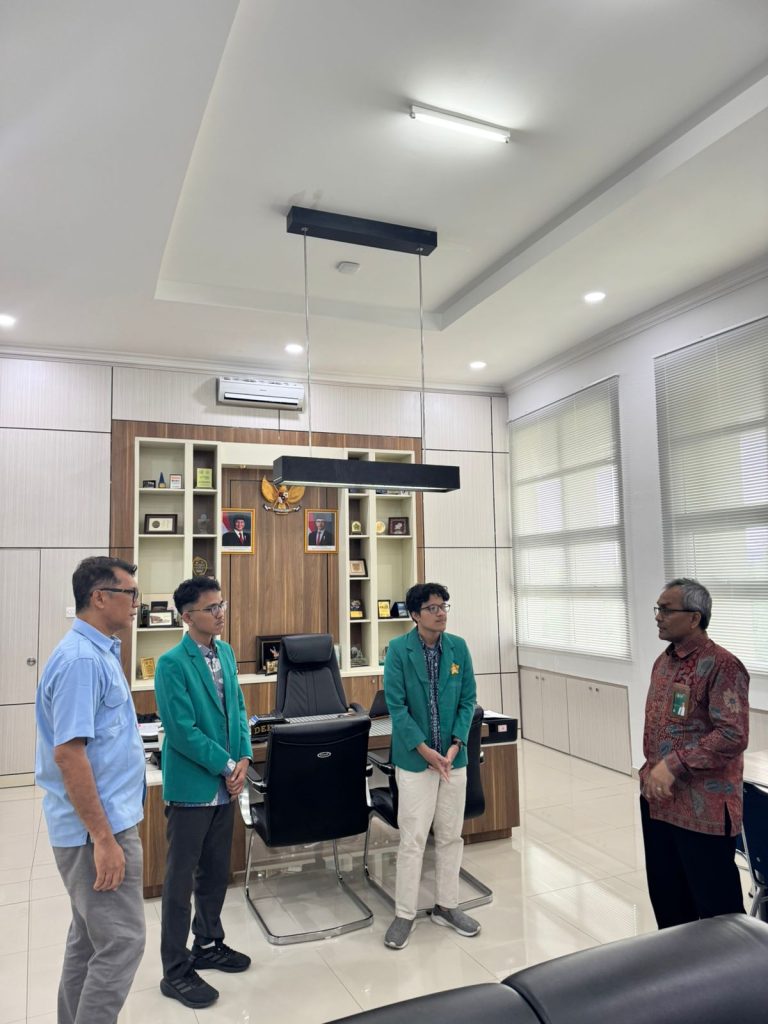
“The participation of FMIPA Universitas Syiah Kuala students in this international Winter School demonstrates our students’ readiness to compete at the global level. The academic experience and international networking gained from this program are expected to directly contribute to strengthening research, innovation, and scientific development within FMIPA USK,” said Prof. Taufik Fuadi Abidin.
Through this program, Universitas Syiah Kuala is expected to further strengthen its international academic partnerships and enhance its contribution to the development of knowledge, particularly in the fields of Artificial Intelligence and Computing.
